 Breastfeeding Basics
 The AAP (American Academy of Pediatrics), recommends that a baby be breastfed for at least the first year of life, and for as long after that as the mother and her baby want to nurse.
As wonderful as breastfeeding is, it does present some challenges, like learning how to deal with leaking. Leaking or spraying breasts are a natural, but sometimes embarrassing, part of your nursing experience.
Here are some facts about leaking that you need to know:
Fact: Nearly all nursing mothers will experience breast milk leakage at some point. Some find it a big bother and inconvenience, while others hardly notice it at all.
Fact: Leaking occurs when mother’s milk “lets down”, due to the MER (“Milk Ejection Reflex”). You can’t control this reflex. It happens when your baby nurses, or when you think about your baby, or when you hear a baby in crying in the mall, or when your breasts become uncomfortably full – like when your baby starts going longer between feedings, you are in a situation where you aren’t able to nurse as often as you usually do, or he starts sleeping through the night.
Fact: Most moms find that leaking occurs most often during the first few weeks of nursing, while their breasts are adjusting to their new lactating state, and the milk supply is building up to meet the needs of the baby. Even though leaking is more common during the early stages of nursing, it can still continue, to one degree or another, for as long as your baby nurses.
Fact: Many women will leak colostrum while they are pregnant, usually starting during the third trimester, but sometimes earlier. Some women leak a lot, some can squeeze out a drop or two, and some never leak at all. The same thing applies after your baby is born – some moms leak so much that the sheets are soaked in the morning, some will leak a few drops from one side when the baby nurses on the other, and some don’t notice any leaking at all. I’ve nursed six babies and hardly ever leaked with any of them.
Fact: Leaking colostrum during pregnancy is normal, and just means that your body is going through the changes that prepare your breasts to produce milk for your baby when she arrives. Most of the time, colostrum will leak during the night while you’re sleeping, but may leak during the day as well. Occasionally leaking a few drops, or being able to squeeze some out in the shower is one thing, but lots of leaking and soreness before your baby arrives may indicate a medical problem, and should be checked out by your doctor.
Fact: Many women find that their breasts become somewhat swollen and/or tender during their pregnancies, but if they become extremely painful, you develop a fever, or have an unusual discharge (like blood or pus), then you should have your doctor check it out.
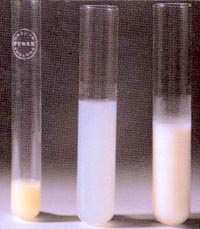 Fact: Breastmilk doesn’t look like formula. The color and consistency may vary from thin, watery, and bluish or greenish, to thick, creamy, and yellowish. Foremilk, the milk expressed at the beginning of a feeding or pumping, doesn’t contain as much fat as hindmilk, the milk expressed after the milk “lets down”, so it may look watery. The hindmilk may be thicker and creamier looking. Both foremilk and hindmilk are equally good for the baby, so don’t worry if the milk you leak or express looks different from one minute to the next. Both foremilk and hindmilk provide important nutrients and are and good for your baby, regardless of what they look like. When your baby is nursing, you don’t see what the milk looks like, anyway. It’s only when pumping, or leaking, that you even see the difference.
Fact: Sometimes new moms see their milk come out a pinkish color, usually when expressing or pumping. The cause of this is a tiny amount of blood in the milk. Seeing blood in your milk (sometimes called “Strawberry Milk”) can be scary, but is usually caused by a cracked nipple, or a condition called “Rusty Pipe Syndrome”. Rusty Pipe Syndrome occurs in moms (or dairy cows) who are giving birth for the first time, and is caused by increased blood flow to the breast, in combination with the rapid development of milk producing tissue in the expectant mother. There is no medical treatment for this condition, and it isn’t harmful to you or your baby. It usually clears up within a week after birth, and doesn’t reoccur after that.
Fact: Your ability to produce milk has absolutely nothing to do with how much you leak. Your body is amazing – it will produce as much milk as your baby needs, regardless of whether you leak a little, a lot, or not at all.
Fact: When the MER occurs, milk will leak from both sides at the same time. Your body doesn’t know you’re not nursing twins, so just to be on the safe side, mother nature made women’s breasts so that the milk comes out of both breasts every time the letdown occurs. You can tell if your milk has let down if milk leaks from the other breast while the baby is nursing.
Fact: The MER may sometimes be very forceful. The milk can sometimes squirt several feet (yes, I did say “feet”), and babies may choke and gag as they try to adjust to the strong flow of milk. The article Oversupply has some tips on dealing with this. You can have multiple let-downs during a feeding, but the first one is the strongest and most forceful, and is often the only one you really feel and are aware of.
Fact: The hormone that causes the MER is oxytocin, the same hormone that causes menstrual cramps, uterine contractions during labor, and orgasms. That’s why you may experience leaking during sex, which can turn your partner on or off, depending on how he feels about it. It is good for both of you to know that it might happen, so that you won’t freak out if it does. Some couples find that emptying the breasts before making love helps, some incorporate it into their lovemaking, and some just laugh it off and keep a towel around to soak it up.
Fact: Your breasts can continue to leak for weeks, months, or even years after you stop nursing. It took your breasts nine months of pregnancy to got through the physical changes that prepared them to make milk, and your breasts don’t go back to their pre-pregnant state immediately after you stop nursing. I was able to express drops of milk from one breast for over five years after my last baby weaned, especially while in the shower. I have a friend who hasn’t nursed in eleven years, and she still leaks milk, especially during lovemaking. She has had it checked out by a doctor, and he told her not to worry about it.
Fact: “Galactorrhea” is the technical term for spontaneous secretion of milk from the breasts when a woman is not nursing. Any time significant milk production continues beyond 3-6 months after weaning, the woman should have a physical exam by a doctor. Occasionally leaking a few drops shouldn’t be anything to worry about, even long after your baby has weaned. The milk that leaks out after weaning tends to be more like colostrum (clear or yellowish, thin and sticky) than mature milk.
Fact: For most moms, leaking at work is much more of a concern than leaking at home. While leaking does tend to lessen after the early weeks of nursing, many mothers will still experience a significant amount of leakage when they are ready to return to work, especially since they usually go for longer periods without emptying the breasts, compared to when they were home with their babies. Soaking through your shirt may be inconvenient while you are at home, running around in a t-shirt, but when you are making an important presentation in front of your boss and a roomful of clients, it can be a huge embarrassment.
Fact: You can’t control your milk overflow, but you can plan for it.
Here are some things you can do to minimize or avoid leaking completely, and some tips on how to deal with it if it occurs:
- Try not to let your breasts get too full, especially at times when the leakage might be embarrassing. Feed your baby frequently. When you begin to feel overly full, let your baby nurse to relieve the pressure before you start leaking. If you’re away from your baby, and your breasts get uncomfortably full, slip into a private place and manually express some milk. If you go too long without relieving the pressure, a plugged duct or a breast infection may develop. Make sure you have a good pump and a time and place to use it if you return to work. Going too long without emptying your breasts at work can decrease your supply, as well as cause mastitis.
- Wear clothing that camouflages wetness. Prints work well. Or carry a jacket or sweater that you can put on quickly if you notice your breasts leaking. Keep an extra shirt at work or in your car.
- Whenever you can, use cloth nursing pads instead of disposables, which have been linked to breastfeeding problems. Those with plastic linings, while keeping clothing dry, keeps the areola damp, exacerbating nipple soreness and fungal infections such as Candida (also known as thrush). You can make your own nursing pads from cut-up cloth diapers. If you’re breastfeeding at home, keep a cloth diaper nearby to soak up milk from the leaking breast and save your pads for outings. If you use disposable pads, change them often.
There is relatively new product on the market that may help with leaking. It’s is a reusable nursing pad called “LilyPadz”. The pads are made out of silicone, and look kind of like big contact lenses, only they are sticky and adhere to your breast.They work on the principle that pressure on the nipple stops milk leakage when the MER occurs. The idea of Lily Padz is to keep that pressure constant, so you never leak, and there is nothing to absorb.Based on feedback from nursing moms, I would say that these are the pros and cons of LilyPadz:
Pros:
- They’re not noticeable under clothes, so you can go braless. This is a nice feature for moms who want to wear halter or tank tops, or for times when you really don’t want to leak – like while you’re at work, or the grocery store, or going swimming. It’s great not to worry about leaking pretty much anytime you go out in public. They’re also useful when wearing a strapless dress. Now that I think about it, I can’t remember a single dressy occasion during my years of nursing six kids that I ever wore a strapless dress to. I was more a jean and t-shirt kind of mom. I didn’t want to show off my post-baby body, so most everything was big and comfy and easy to breastfeed in, but I was definitely not into strapless gowns. Maybe it was just me.
- They seem to work well at night. Moms who wake up sleeping in a puddle in the morning use them when they go to bed, and they minimize or eliminate the heavy leaking during the night. They also provide an alternative to absorbing the milk that leaks out from the other side while you’re nursing, so you don’t have to keep a towel next to you to throw over your breast.
- They help with healing sore nipples. They work on the principle of “moist wound healing”. Hydrogel dressings are often used by doctors, so it makes sense that the silicone pads would help heal sore nipples. If your nipples are cracked or scabby, these dressings can help the sores from forming scabs which are pulled off whenever you remove the regular pads. I know this sounds really gross, but it doesn’t happen often, and if it does, it heals very quickly once the baby gets the hang of nursing.
Cons:
- They don’t keep you from leaking completely, especially if you are a heavy leaker. Sometimes they don’t work as well during the early stages of nursing as they do once the milk supply is regulated.
- They often don’t last long as long as the manufacturers claim, so many moms will use them for outings and use regular pads or absorb the extra milk with a towel while at home.
- The stickiness wears off too soon, which can lead to leakage, even if you follow the cleaning and storing directions to the letter.
- They may worsen yeast infections on the nipples, due to constant moisture. I wouldn’t recommend their use while you are treating your nipples for a yeast infection.
- One size doesn’t fit all.
- When you take them off, if they aren’t sticky enough to form a tight seal, the collected milk falls out.
- They’re fairly expensive compared to other pads – usually around $20.00 a pair.
- Don’t expect Lily Padz to be a cure all for every situation but instead a convenient way for a nursing mom to go braless once in a while. Moms who leak a lot are probably going to have a use disposable or cotton nursing pads instead of or in addition to the silicone pads.
Fact: When you first start nursing, it usually takes a minute or two of sucking before the milk lets down. For the first few days after birth, it is harder to feel this let-down feeling since your milk has not yet come in. After your milk has come in and you have been nursing for several weeks, your let-down response will become more regular and automatic. It will usually let down immediately after your baby starts nursing, or even while you are getting ready to put her to the breast.
Fact: After breastfeeding is well established, many women experience an uncontrolled letdown reflex and leaking when they hear a baby cry (it doesn’t even have to be their own) , or they can just think about their baby and suddenly, milk will begin to flow spontaneously.
Fact: Some moms can feel exactly when their milk lets down, while others don’t feel anything at all. Moms who do experience it as a distinct feeling describe it as a tingling or “pins and needles” sensation.
Fact: Even if you don’t feel your milk let down, that doesn’t mean the MER ( milk ejection reflex) hasn’t occurred. Once the milk starts flowing, you will see a change in the baby’s swallowing patterns, and some drops of milk will come out of the other breast.
There is a fairly new product on the market that is designed to collect the milk that leaks out of the other side, instead of absorbing it (and wasting that “liquid gold”). It’s called “Milkies Milk Saver”, and costs around $25.00. It’s a plastic container that you put inside your bra to collect milk after let-down has occurred. You can collect milk directly into the container or a plastic milk storage bag can be attached with a rubber band.
Based on feed back from moms, here are what seem to be the pros and cons of Milkies Milk-Saver:
Pros:
- It’s designed to last indefinitely, unlike nursing pads.
- It’s made to collect up to 4 ounces, but it’s very unusual for that much milk to come out one side while your baby is nursing on the other. Many moms are able to collect ¼ to 1 ounce of milk, but at the end of the day, you have enough for a bottle, and didn’t have to pump to get it.
- The plastic molds to fit different sized breasts.
Cons:
- It tends to leak if you lean over to far when there is milk in the container.
- It’s too big to use when you go out. It shows under your clothes, so it’s mostly used at home.
- Large plastic shell shows under clothes, and can be a hassle to empty, so it can’t discreetly be used in public.
- The collected mike ends to leak out, especially if you lean over while you’re wearing them.
- Can’t be used at night – too bulky.
It’s something to try, especially if you leak a lot. Sometimes you would be surprised at how much milk comes out of one side, and is going to waste.
 Fact: When you begin to feel the tingly sensation of milk letdown, and want to stop the leaking, apply firm pressure to your breasts by crossing your arms over your chest and hugging yourself. You can also use the base of the palm of your hands to press over the nipple. If you’re sitting at a table, cup your chin in your hands and press your forearms into your breasts. Or, you can cross yours arms, again applying pressure with your forearms, or pretend you’re fiddling with your earring or your hair and use one forearm to apply pressure to both breasts. This is especially helpful if you’re out somewhere and don’t want everyone to know that you’re trying not to leak. You can always use your hand/fingers to apply pressure, but this is harder to do discreetly in public.
Laugh it off. Humor goes a long way in coping with this little annoyance. Once the leaking subsides, you’ll have some funny stories and memories to share with new moms. My favorite is the mom whose husband was a high school basketball coach, and she was sitting on the very front bleacher cheering on his team. When the winning goal was scored, the yelling and clapping got the baby’s attention, and he pulled off the nipple and turned to see what was going on. The mom’s MER had just kicked in, so the forceful let down caused her milk to spray so far that it landed all over the side of the court, and someone with a mop had to clean it up. It still makes me laugh just to think about it. As mortified as she was at the time, she laughs about it too – now that her son is in kindergarten.
Anne Smith, IBCLC
Breastfeeding Basics
(Edited November 2018)
* Please ‘Pay it Forward’!*
If you found any of the information in this article, helpful, please consider making a small donation to my favorite cause – Project Pets: Spay, Neuter, Love – an all volunteer, non-profit organization that provides free spay and neuter services for homeless rescue dogs and cats…because every baby deserves a home, whether they have two legs or four! To find out how you can help, visit Project Pets on Facebook.