 Breastfeeding Basics
Ask Anne…
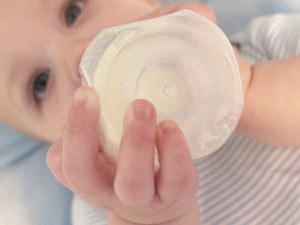 Question: I plan to breastfeed exclusively for six weeks. However, I plan to go back to work after my six weeks are up, so I want to pump and put my breast milk into a bottle only. I’m not sure how to introduce the bottle to my infant, and don’t know how long I should wait before I introduce it. Could you please tell me the best ways of doing this?
Answer : Congratulations on your decision to continue nursing after you return to work. It’s a real labor of love, but well worth all the effort.
When you say that you want put the milk in bottles only, does that mean that you are not going to pump while you are at work? If so, then it is going to be very difficult to maintain your milk supply for a baby who is only six weeks old. Or do you mean that you plan to exclusively pump after you return to work and not put the baby on the breast at all? That is also going to present difficulties as well.
The first month or so of nursing are a time of establishing and building your supply. At six weeks, you will have a good supply built up and your baby should be nursing efficiently. In order to establish an adequate milk supply, your newborn will nurse frequently (10-12 times or more in each 24 hour period in the beginning). If you return to work full time and your breasts don’t receive any stimulation for an extended period of time each day, your supply is going to diminish. There is no way to predict what any baby will do in a specific situation. Some older babies who are eating solids and only nursing a few times a day will do well with the “nursing when you’re together and using formula when you can’t nurse” regimen. Others will begin to lose interest when your supply starts to drop. Young babies who are totally dependent on milk to meet all of their nutritional needs are more likely to become frustrated and unwilling to go on the breast at all if your supply drops dramatically.
It would be much easier to continue nursing after you return to work if you plan to nurse when you are with your baby, and pump at least once during the workday.
If you know that you want to have the option of giving your baby bottles, this is what I recommend:
1) At 3-4 weeks (or 2-3 weeks if you are returning to work at 6 weeks) begin pumping after feedings for 4-5 minutes if your baby had a good feeding, or 8-10 minutes if he didn’t nurse well or only nursed on one breast. This will get out the rest of the high calorie, fatty hind milk, and will not interfere with your baby’s nursing schedule. It’s important to be using a good double pump. With a less efficient pump, you are going to have a problem getting out the milk that is left in the breast after a feeding. If your baby consistently only takes one breast at a feeding, you can pump the other breast, but if you do this too often, you may overstimulate your supply. Mom’s whose babies only take one side at a feeding generally have lots of milk to begin with. (See Oversupply: Too Much Breast milk.)
2) If you are bottle-feeding a newborn, I recommend a slow-flow nipple. A baby older than a few weeks is very unlikely to forget how to nurse just because you give him an artificial nipple, but if the flow is too fast, he may get impatient when he has to work harder at obtaining milk from the breast.
3) Try offering the bottle when your baby isn’t super hungry. This may seem illogical, but when a baby is frantically hungry, he is going to be in no mood to try something new. He just wants to nurse.
4) Let someone else offer the bottle at first. Your baby associates your smell and touch with nursing, and may insist on the real thing if you try to give him a bottle. You may have to leave the room entirely in order for the effort to be successful. It’s a good idea to have your baby’s caregiver give them at least one bottle before you return to work.
5) Many babies associate the cradle hold, where they are cuddled against the breast, with nursing, and will refuse to accept the bottle as a substitute. This is especially true of newborns. Although some babies will accept a bottle more readily in the cradle hold, most will do better if you prop them up on your knees or in an infant seat.
6) Offer a small amount at first. If he takes it readily, you can always offer more. If he doesn’t take it, you won’t have wasted much.
7) Make sure the nipple isn’t cold when you offer it. Many babies couldn’t care less if the milk you give them is cold (and it doesn’t cause digestive problems – that’s an old wives tale) but they don’t like the feel of a cold rubber nipple in their mouth. Run it under warm water before you try giving him the bottle.
8) When offering the bottle, tickle the baby’s lips gently with the nipple until he opens his mouth and explores the nipple. Don’t try to force it in his mouth. Most babies under six weeks will take a bottle readily. Older babies sometimes get set in their ways and don’t want to settle for anything but the real thing. As long as you wait until your supply is established and your baby has started gaining weight well, you should be able to combine breast and bottle feeding without much difficulty.
For more information see the articles Pumping and Storing Breastmilk, Introducing Bottles and Pacifiers, and Returning to Work.
Anne Smith, IBCLC
Breastfeeding Basics
If you are bottle-feeding a newborn, I recommend a slow-flow nipple. A baby older than a few weeks is very unlikely to forget how to nurse just because you give him an artificial nipple, but if the flow is too fast, he may get impatient when he has to work harder at obtaining milk from the breast.






One comment
Pingback: How to bottle-feed the breastfed baby : KellyMom