 Breastfeeding Basics
Ask Anne…
 Question: I had so many problems breastfeeding my first baby that I’m afraid to try again. I wasn’t making enough milk and my nipples were bleeding from the constant sucking. I want to try to breastfeed this time but I am scared. Is there anything I can do now to prepare?
Answer: I think it is wonderful that you are planning to nurse your second baby in spite of the breastfeeding problems you had before. First of all, let me assure you that nursing a second baby is usually much easier than nursing the first one.
Part of the reason for this is that when you are pregnant for the first time, you really don’t know what to expect, no matter how many books you read, how many classes you take, or how many friends with babies you hang out with or talk to. Being pregnant, giving birth, and breastfeeding are things that you just have to experience firsthand before you can really understand them.
Most new mothers are in a state of what I call “baby shock” more or less constantly from the time they find out they are pregnant until they make it through the early months of parenthood. Then they progress into “toddler shock,” “kid shock,” and last but not least, the dreaded “teenager shock.” By the time you reach that stage, you are pretty much used to being a parent, and nothing surprises you anymore.
In some ways, I think that the first months of parenthood are the hardest, because you have gone through a momentous life changing experience and you realize that your life will never, ever be the same. Besides the euphoria you feel every time you look at your awesome, absolutely perfect little creation, there are many major adjustments that have to be made during a time when you are recovering from the physical changes and stresses of pregnancy and childbirth, dealing with sleep deprivation, hormonal upheavals, and the scary realization that you suddenly have the awesome and scary responsibility of caring for this new little individual 24/7.
Breastfeeding is something that you can do for your baby that not only helps get him off on the best possible start in life, but also has a life long impact on his physical and emotional well being. It’s not surprising that most women choose to breastfeed, but unfortunately, many don’t nurse for very long due to feelings of being overwhelmed and lack of support. This is true for most mothers in this country. While 79% of mothers initiate nursing at birth, only 47% are still nursing at six months, and 25% at one year. This is in spite of the fact that the AAP (American Academy of Pediatrics) recommends nursing for at least the first year, and the WHO (World Health Organization) recommends nursing for at least two years.
In reply to your specific questions: there is no way to predict whether you will have any breastfeeding problems at all with this new baby (including nipple soreness), and no way to “toughen up” your nipples in advance. The best way to prevent problems is to educate yourself beforehand about the basics of positioning and what to expect when the baby is born, and to have a good support system in place in the event that problems do develop. I don’t know what kind of support/advice you had before, but if you gave up on nursing because of the pain, then something was terribly wrong. Breastfeeding is not supposed to hurt!
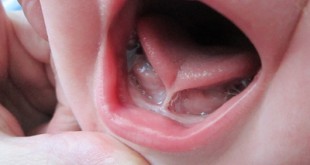
Most mothers do experience some tenderness in the early days, but severe pain that lasts for longer than a week or so has some medical explanation and treatment, whether the cause is improper suck, yeast infection on the nipples, tongue-tie, etc. A good lactation professional will be able to work with you to discover the cause of the problem and make recommendations to correct it early on.
It is very important to have a good support system in place so that you will have someone to call for advice at the first sign of problems. Ask nursing mothers in your community for recommendations on “breastfeeding friendly” doctors in your area. Attend La Leche League meetings. You’ll get to meet other nursing couples, as well as have access to tons of excellent breastfeeding information. La Leche League is a great source of support for all expectant and nursing mothers. Some mothers (and doctors) have the unfortunate misconception that La Leche League is made up of a bunch of fanatical earth mothers who all nurse their kids till they are six, but this is not the case. La Leche League Leaders are mothers who breastfed their babies and discovered that they loved nursing so much that they wanted to volunteer their time to help other mothers have the same satisfying experience. They undergo extensive training in order to have the information they need to effectively counsel nursing mothers. They aren’t doctors or nurses, and they don’t give medical advice, but they can listen, advise you on most basics aspects of breastfeeding management, and make a referral to a health care provider who is knowledgeable in lactation if needed.
Find out if there are any IBCLCs (International Board Certified Lactation Consultants in your area. These are health care professionals who have received extensive training in lactation, above and beyond the training that doctors or nurses receive. They are the only members of your health care team whose focus is primarily breastfeeding. Most major hospitals have IBCLCs on staff, and some IBCLCs are in private practice. Check around to find out what services are available and prices in your area.
Insurance often covers lactation services, especially during hospital stays or in the case of hospitalized or premature infants. Check on insurance coverage and find an IBCLC or a La Leche League group in your area before your baby arrives.
The article Establishing Your Milk Supply: Starting Off Right has lots of information you might find helpful. I hope that everything goes smoothly for you this time around.
Anne Smith, IBCLC
Breastfeeding Basics